
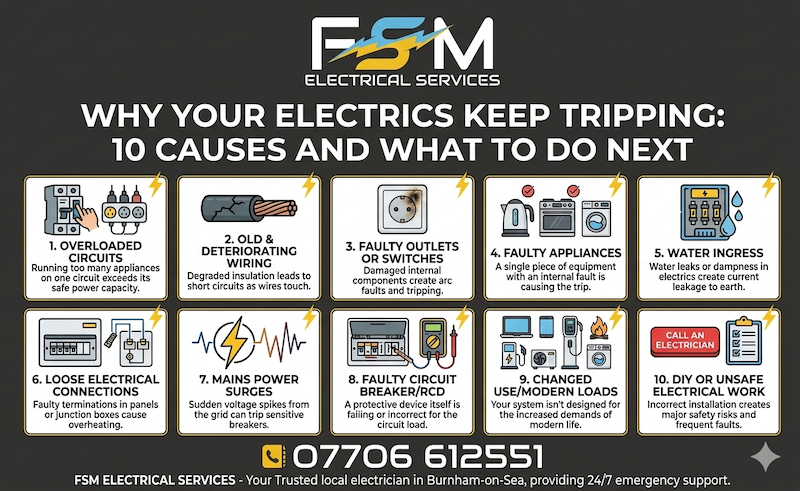
If your electrics keep tripping, it is usually a sign that something is wrong somewhere within the installation or with something connected to it. A one-off trip may not always indicate a major issue, but repeated tripping should never be ignored. In many cases, professional electrical fault finding and repairs are the safest way to identify the true cause and prevent the problem from returning.
In this guide, we explain the most common reasons electrics trip, what you should do next, and when it is time to call a qualified electrician.
What Does It Mean When Electrics Trip?
When the electrics trip, a protective device has switched off part of the installation to reduce the risk of danger. This is often a sign that the system has detected a fault, overload, or unsafe condition. The trip is not the real problem itself. It is the warning that something needs attention.
If the same circuit keeps tripping repeatedly, the cause needs to be investigated properly rather than simply resetting it over and over again.
1. Overloaded Circuits
One of the most common reasons for tripping is that too many appliances or devices are being used on the same circuit at once. This is particularly common in kitchens, home offices, and older properties where the layout of the electrics may not suit modern demand.
2. Faulty Appliances
A faulty appliance can cause an individual circuit or the wider installation to trip. Kettles, heaters, washing machines, extension leads, and older plug-in devices are frequent culprits. Unplugging appliances one by one can sometimes help narrow down the cause, but it is not always definitive.
3. Damaged Sockets or Switches
Faulty or damaged accessories can also cause tripping. Cracked sockets, loose switches, overheating fittings, or signs of wear inside the accessory may all create unsafe conditions on the circuit.
4. Moisture or Water Ingress
Moisture is another common cause of nuisance tripping. Outdoor electrics, damp areas, kitchens, bathrooms, and wiring affected by leaks can all contribute to faults that trigger the protective devices.
5. Wiring Faults
Damaged, ageing, or poorly connected wiring may cause persistent tripping, especially in older properties. Hidden wiring faults are not always obvious, which is why a recurring problem should never be dismissed just because nothing looks wrong on the surface.
6. Consumer Unit Issues
Sometimes the issue lies not with the connected appliances or wiring alone, but with the protective equipment itself. A board that is old, worn, or no longer suited to the property may struggle to provide dependable performance.
Where the board is part of the problem, it may be necessary to review consumer unit and fuseboard issues to see whether improvement or replacement is needed.
7. Outdoor Electrical Problems
External sockets, lighting, garden equipment, and outdoor cabling can all develop faults over time. Exposure to weather and moisture can make these circuits more prone to intermittent tripping, especially after rain or periods of poor weather.
8. Faults After DIY Alterations or Older Repairs
Sometimes tripping begins after previous electrical alterations, poor-quality repair work, or changes made without proper testing. Even if the fault takes time to show up, an underlying issue may already exist within the circuit arrangement or connections.
9. Heat and Overheating Connections
Loose or deteriorated electrical connections can create heat, and in some cases the trip is a sign that the installation is protecting against a more serious risk. Burning smells, buzzing, or warm accessories should always be taken seriously.
10. A Wider Need for Inspection and Testing
If the cause is not obvious, or if multiple circuits seem affected, a wider inspection may be needed. Repeated tripping is often a strong reason to arrange electrical inspection and testing, especially if the property has older electrics or has not been checked for many years.
What Should You Do When the Electrics Trip?
If your electrics trip, the safest approach is to:
- Switch off and unplug suspect appliances if safe to do so
- Check whether one circuit or the whole property is affected
- Reset the breaker once only if appropriate
- Stop and seek help if it trips again immediately
- Do not keep resetting the same breaker repeatedly
Persistent tripping is a sign that something needs to be found and repaired, not simply overridden.
When to Call an Electrician
You should contact an electrician if:
- The same circuit trips repeatedly
- You notice burning smells or heat
- The board feels warm or makes unusual sounds
- The problem affects essential appliances or business use
- You cannot identify any obvious appliance causing the issue
The sooner the cause is diagnosed, the easier it is to prevent a more serious electrical fault developing.
Speak to FSM Electrical About Tripping Faults
If your electrics keep tripping in Burnham-on-Sea or nearby, FSM Electrical Services can help identify the cause and carry out the right repair. Whether the issue is linked to a faulty circuit, damaged accessory, consumer unit concern, or a wider installation problem, proper fault finding is the safest route forward.
Repeated tripping is never something to ignore. Getting it checked early protects both the property and the people using it.