PAT testing is an important part of maintaining a safe working environment and reducing the risk of electrical faults involving portable appliances. For many companies, landlords, and workplaces, regular safety certificates and testing help demonstrate a proactive approach to electrical safety while protecting staff, visitors, tenants, and equipment.
If you run a business in Somerset, it is important to understand what PAT testing covers, which items should be checked, and how often testing should be carried out. In this guide, we explain the essentials in clear terms.
What Is PAT Testing?
PAT stands for Portable Appliance Testing. It refers to the inspection and testing of electrical appliances that are connected by a plug and socket, or otherwise moved and used as portable equipment.
The purpose of PAT testing is to identify signs of wear, damage, loose wiring, or electrical faults that could lead to shock, overheating, or fire. It is a practical way to monitor the safety of appliances used in workplaces, rented properties, shops, offices, and other business environments.
What Types of Appliances Need Testing?
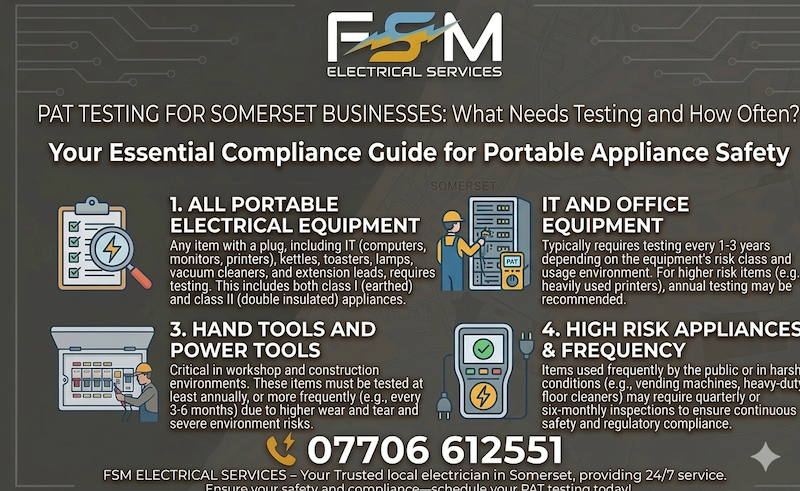
PAT testing usually applies to portable or moveable electrical equipment used as part of day-to-day operations. This can include:
- Kettles and microwaves
- Computers and monitors
- Extension leads
- Printers and office equipment
- Vacuum cleaners
- Portable heaters and fans
- Power tools
- Chargers and plug-in devices
Any appliance that is used regularly and can suffer wear or damage over time may need to be inspected and tested.
Why PAT Testing Matters for Businesses
Electrical appliances are used constantly in most work environments. Over time, plugs can loosen, cables can fray, and internal faults can develop without obvious signs. PAT testing helps detect those issues before they become a hazard.
For many employers, regular testing is part of maintaining a safe workplace. It also supports planned maintenance and can work alongside broader commercial electrician services where fixed wiring, lighting, and power systems also need ongoing attention.
How Often Should PAT Testing Be Done?
There is no universal rule that applies to every business in exactly the same way. The right testing frequency depends on the type of equipment, how often it is used, and the environment it operates in.
For example:
- Office equipment in low-risk environments may need less frequent testing
- Portable tools used on active sites often need more regular checks
- Rental properties and holiday lets may need checks between occupants or as part of wider safety routines
- Appliances in public-facing environments can need closer monitoring due to heavier use
Testing intervals should always be sensible and based on risk, usage, and condition.
PAT Testing for Landlords and Rental Properties
PAT testing is also useful in rental settings where plug-in appliances are supplied as part of the tenancy. This may include white goods, kettles, lamps, or other electrical items provided for tenant use.
Where property owners need wider support with inspections, compliance, and maintenance, PAT testing can sit alongside landlord electrical services to help keep properties safe and professionally managed.
PAT Testing Is Not the Same as Fixed Wiring Testing
It is important to understand that PAT testing only covers portable appliances. It does not replace inspection of the fixed electrical installation. Sockets, circuits, consumer units, and wiring systems all fall outside the scope of portable appliance testing.
That means PAT testing should be seen as one part of an overall electrical safety approach, not a complete substitute for wider inspection and maintenance work.
Common Issues Found During PAT Testing
A PAT test may identify a range of faults or concerns, including:
- Damaged plugs
- Loose cable terminations
- Frayed or trapped flexes
- Equipment damage affecting safety
- Signs of overheating
- Inappropriate repairs or unsuitable leads
Finding these issues early helps prevent more serious problems and can reduce the chance of equipment failure or safety incidents later.
Which Businesses Benefit Most from PAT Testing?
PAT testing is useful for a wide range of organisations, including:
- Offices
- Retail shops
- Salons and treatment rooms
- Hospitality venues
- Holiday lets and rental properties
- Workshops and industrial spaces
Any environment using portable electrical equipment can benefit from a structured testing programme.
Book PAT Testing with FSM Electrical
If your business, rental property, or workplace needs PAT testing, FSM Electrical Services can help you keep your electrical equipment checked and professionally maintained. Regular testing helps support safe working conditions, reduce risk, and keep appliances in suitable condition for use.
Whether you need testing for a small office or wider support across a larger premises, arranging PAT testing at sensible intervals is a practical step towards better electrical safety.