As more homeowners look for smarter ways to manage energy use, two options come up again and again: EV charging and solar battery storage. Both can play an important role in making a property more future-ready, but they serve different purposes. For households already planning EV charger services, it often makes sense to think more broadly about how the rest of the electrical setup could support long-term energy use.
If you are trying to decide what works best for your property, this guide breaks down the main differences between EV charging and solar battery thinking, and explains what should be considered before moving ahead with either route.
What an EV Charger Setup Is Designed to Do
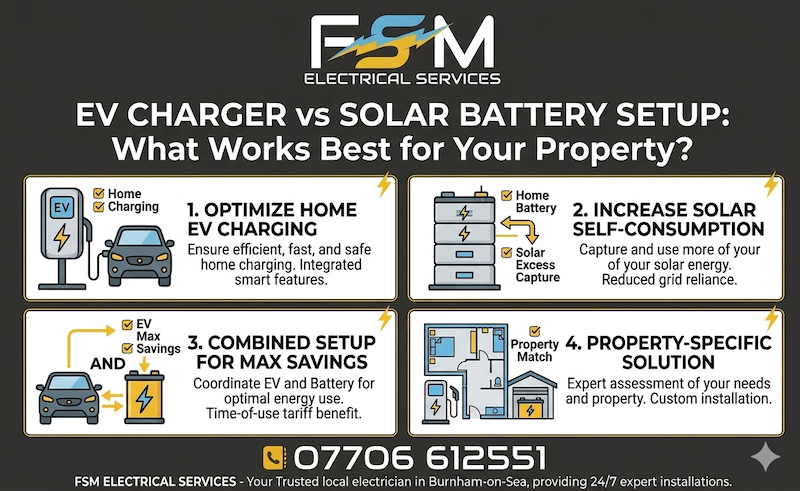
An EV charger setup is focused on giving your vehicle a safe, practical, and dedicated way to charge at home. For most households, this means faster charging, greater convenience, and more day-to-day control compared with relying on a standard plug socket or public charging alone.
EV charging is usually the more immediate priority when the household already owns, or is about to own, an electric vehicle. It directly supports day-to-day transport needs and quickly becomes part of the normal routine.
What a Solar Battery Setup Is Designed to Do
A solar battery setup is about storing energy for later use rather than delivering power directly to a vehicle. It forms part of a wider home energy strategy and is typically considered by homeowners looking at long-term efficiency, flexibility, and energy management.
While battery storage and solar are not the same thing, they are often discussed together because they both relate to how the home generates, stores, and uses electricity over time.
Which Option Comes First for Most Homes?
For many households, the EV charger comes first because it solves an immediate and practical need. If you already have an electric car, the benefit of home charging is easy to understand. Solar and battery planning is often considered slightly later, once the homeowner starts thinking more broadly about electricity usage and future efficiency improvements.
That said, the right order depends entirely on the property and the household’s priorities.
How the Existing Electrical System Affects the Decision
Before any significant electrical upgrade is planned, the current installation needs to be suitable. The condition of the board, the available capacity, and the overall standard of the wiring all influence what can be added safely and effectively.
In some homes, part of the planning process may involve reviewing consumer unit upgrades so that the system is ready for wider changes and offers appropriate protection.
Can EV Charging and Battery Planning Work Together?
Yes, they can. In fact, many homeowners eventually look at the property as a whole rather than treating each electrical upgrade in isolation. If the aim is to make the home more efficient, better prepared for modern energy use, and easier to manage over time, coordinated planning makes sense.
This is especially true where there are future ideas involving electric vehicles, broader home improvements, or other electrical additions that could affect the installation.
When Electrical Repairs Should Come First
Not every home is immediately ready for more advanced energy-related upgrades. If the property has known faults, recurring tripping, ageing wiring, or unresolved issues, then those concerns should be dealt with before looking at wider system enhancements.
That is why some households need electrical upgrades and repair work first. Fixing the underlying condition of the installation creates a safer and more reliable base for any future additions.
Questions to Ask Before Choosing a Direction
If you are weighing up your options, ask yourself:
- Do I already own an electric vehicle, or plan to soon?
- Is my current electrical system in good condition?
- Am I trying to solve an immediate charging need or plan longer term?
- Would a more joined-up home energy strategy benefit the property?
- Am I likely to carry out other electrical upgrades later?
These questions often make the next step much clearer.
There Is No One-Size-Fits-All Answer
Some homes benefit most from starting with EV charging. Others should first focus on ensuring the electrical installation is ready for future upgrades. The best route depends on property condition, household priorities, and how the home will be used over the next few years.
What matters most is that decisions are made on a practical basis rather than guesswork.
Speak to FSM Electrical About Future-Ready Electrical Planning
If you are comparing EV charging and wider home energy options, FSM Electrical Services can help you assess what makes sense for your property now and what may be worth planning for later. Whether you need EV charger installation, electrical improvement work, or advice on preparing the home for future upgrades, the right guidance helps you move forward with confidence.
Making the right electrical decisions early can save time, reduce disruption, and help your property stay ready for what comes next.