Electric vehicle ownership continues to grow, and more homeowners are now looking for a reliable, convenient way to charge at home. Choosing professional EV charger installation gives you a safer, faster, and more practical charging setup than relying on a standard plug socket.
If you are planning an EV charger installation in Burnham-on-Sea in 2026, it is important to understand what type of charger you need, where it should go, and whether your property’s electrical system is ready. This guide covers the essentials so you can make the right decision for your home.
Why Install an EV Charger at Home?
A home EV charger offers greater convenience, faster charging times, and better day-to-day reliability. Rather than depending on public charging points, you can charge overnight and start each day with your vehicle ready to go.
Key benefits of home EV charging include:
- Faster charging than a standard socket
- Improved safety with a dedicated installation
- Greater convenience for everyday use
- Better control over charging times
- Potential long-term savings when charging off-peak
For many households, a properly installed EV charger has quickly become an essential home upgrade.
Choosing the Right EV Charger
Not every EV charger suits every property. The right option depends on your vehicle, parking arrangement, electrical capacity, and how quickly you want to charge.
Common factors to consider include:
- Charger speed and output
- Tethered or untethered design
- Smart charging features
- App control and scheduling
- Future compatibility with another vehicle
A smart EV charger is often the preferred option because it allows you to monitor charging, schedule sessions, and make better use of lower electricity tariffs.
Is Your Electrical System Ready?
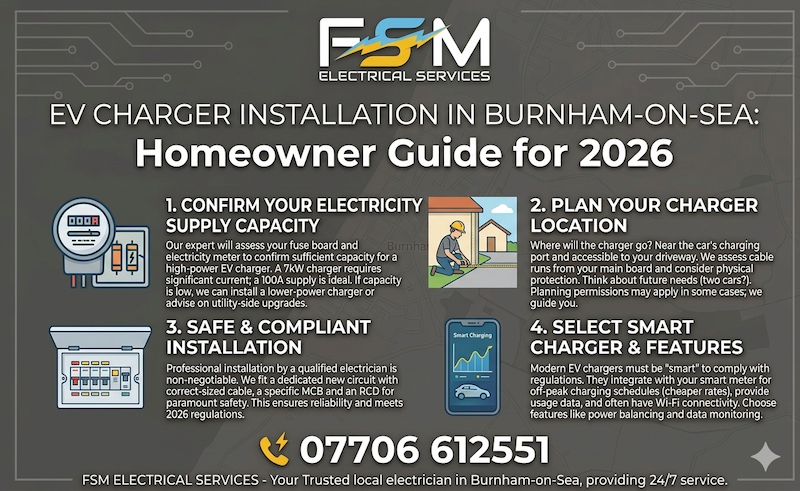
Before any EV charger installation begins, the existing electrical installation needs to be assessed. In some homes, the system is already suitable. In others, electrical improvements may be needed first.
One of the most common upgrade requirements involves the consumer unit. Older boards may not have the right protection arrangements for a modern EV charger, so it is sometimes necessary to review consumer unit upgrades before installation goes ahead.
Checking the existing setup helps ensure the charger is installed safely and in line with current electrical standards.
Best Location for an EV Charger
The best location for a home EV charger is usually one that offers easy access to the parked vehicle while keeping cabling neat, protected, and practical. Driveways, side walls, garages, and dedicated parking spaces are all common options.
When deciding where to place the charger, a qualified electrician will look at:
- Distance from the consumer unit
- Ease of cable routing
- Vehicle parking position
- Outdoor exposure and weather protection
- Safe mounting height and accessibility
The aim is to create an installation that is safe, tidy, and convenient for daily use.
Can an EV Charger Be Installed at Any Property?
Most domestic properties can accommodate an EV charger, but the installation details vary. Off-road parking is usually the most straightforward arrangement. Flats, shared parking, and some older properties may need additional planning and assessment.
If the property has older wiring, previous electrical issues, or known faults, it makes sense to review any electrical repair services first so that the charger is installed onto a safe and dependable system.
What Happens During Installation?
A professional EV charger installation usually includes:
- Assessment of the property and electrical supply
- Confirmation of the best charger location
- Safe cable routing and fixing
- Protective devices and electrical connection
- Testing and commissioning
- Demonstration of charger use and controls
A properly installed EV charger should not only work well from day one, but also continue to provide dependable charging for years to come.
Smart Charging and Future-Proofing
Many homeowners now want more than just basic charging. Smart functionality makes it easier to control energy use and plan ahead. Features such as timed charging, usage monitoring, and tariff-based scheduling can all improve efficiency.
It is also worth thinking ahead. If you may buy a second EV in the future, or if you are considering wider home electrical upgrades, this should be discussed at the planning stage.
Why Professional Installation Matters
EV chargers should always be installed by a qualified electrician. The installation must be correctly designed, protected, and tested. Cutting corners can lead to nuisance tripping, poor performance, or safety issues later.
Professional installation gives you confidence that the system is suitable for your home, compliant with current requirements, and ready for regular use.
Book an EV Charger Installation with FSM Electrical
If you are planning EV charger installation in Burnham-on-Sea, FSM Electrical Services can help you choose the right setup for your property. From electrical assessment through to safe installation, we provide practical advice and dependable workmanship for homeowners looking to make the switch.
Whether you already know which charger you want or need help understanding your options, getting the installation right from the start is the best investment.