When an electrical fault happens unexpectedly, it can quickly turn from a nuisance into a serious safety risk. Knowing what counts as a genuine electrical emergency helps you act fast, protect your property, and reduce the risk of fire, electric shock, or further damage. If you need urgent help, professional electrical repairs in Burnham-on-Sea should always be arranged by a qualified electrician.
At FSM Electrical Services, we regularly help homeowners, landlords, and businesses deal with urgent electrical issues across Burnham-on-Sea and surrounding areas. In this guide, we explain what an electrical emergency looks like, what to do first, and when to call an electrician without delay.
What Is an Electrical Emergency?
An electrical emergency is any fault or failure that creates an immediate danger to people, property, or the electrical installation itself. Some problems may seem minor at first, but can quickly become more serious if ignored.
Typical electrical emergencies include:
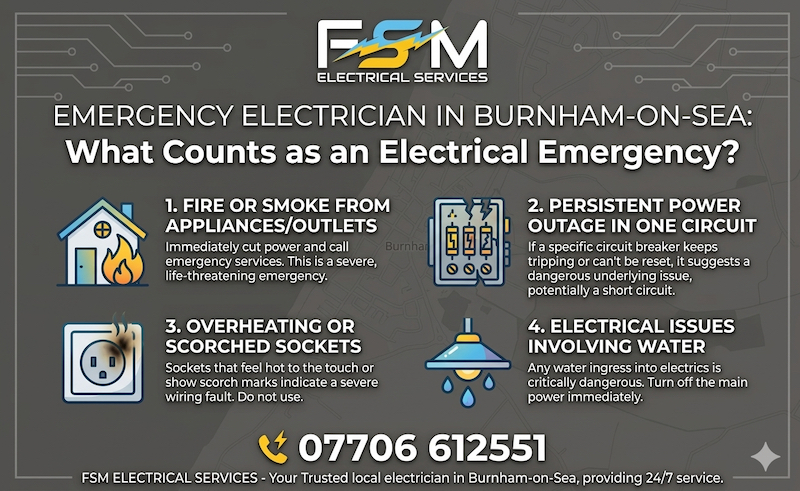
- Burning smells from sockets, switches, or fuseboards
- Sparking outlets or visible scorching
- Repeated tripping of the electrics
- Loss of power to essential circuits
- Overheating consumer units or fuseboards
- Electric shocks from appliances or fittings
- Water ingress affecting electrical systems
- Damaged wiring that is exposed or unsafe
If you notice any of these signs, it is important to stop using the affected part of the system and get it checked as soon as possible.
Burning Smells, Heat, and Scorch Marks Should Never Be Ignored
One of the clearest signs of an electrical emergency is a burning smell coming from a socket, switch, appliance connection, or fuseboard. Heat build-up often points to loose connections, overloaded circuits, damaged wiring, or failing components.
If a socket faceplate feels hot, a switch is crackling, or you can see discolouration around fittings, turn the power off to that circuit if it is safe to do so. Do not continue using the socket or switch. Problems like this can escalate quickly and may require investigation of consumer unit and fuseboard faults as well as the wiring connected to them.
When Repeated Tripping Becomes an Emergency
Electrics can trip for several reasons, including overloaded circuits, faulty appliances, moisture ingress, or wiring faults. A one-off trip is not always an emergency. However, if the same breaker or RCD keeps tripping repeatedly, there is usually an underlying issue that needs fault finding.
Repeated tripping becomes more urgent when:
- The power will not stay on
- Essential appliances or heating are affected
- You can smell burning or notice buzzing sounds
- The consumer unit feels warm
- The trip happens immediately after resetting
Resetting the breaker again and again is not a long-term solution. A qualified electrician should diagnose the cause properly before the issue worsens.
What to Do If You Lose Power
If your property loses power, first check whether it is an internal fault or a wider area problem. See whether nearby properties are also affected. If neighbouring buildings still have electricity, the issue may be inside your own installation.
Loss of power can be especially urgent when it affects:
- Lighting in stairways or shared areas
- Security systems
- Business operations
- Fridges, freezers, or essential equipment
- Rental properties with occupied tenants
Where power loss is linked to testing issues, damaged circuits, or electrical deterioration, it may also be sensible to arrange electrical safety certificates and testing after the immediate repair has been completed.
Emergency Electrical Problems in Homes, Rentals, and Businesses
Electrical emergencies affect different property types in different ways. In a family home, a dangerous fault might stop lighting, heating, cooking, or hot water. In a rental property, the issue can put tenants at risk and may require urgent attendance to make the installation safe. In a business setting, electrical failure can disrupt trading, damage equipment, and create health and safety concerns.
That is why quick response and accurate fault finding matter. The right repair is not just about getting the electrics back on. It is about identifying the real cause of the problem and making sure the installation is left safe.
What You Should Do Before the Electrician Arrives
If you suspect an electrical emergency, follow these steps:
- Stop using the affected socket, switch, or appliance
- Turn off the circuit if it is safe to do so
- Do not touch exposed wires or damaged fittings
- Keep other people away from the affected area
- Do not attempt DIY electrical repairs
- Call a qualified electrician for urgent help
Taking quick, sensible action can help reduce risk before professional repairs begin.
When a Fault Is Urgent but Not Yet Dangerous
Some electrical issues are not immediate emergencies, but should still be booked in quickly. These include flickering lights, sockets that no longer work, nuisance tripping, damaged accessories, or signs that a fuseboard is outdated. Problems like these often start small and become more expensive or dangerous when left unresolved.
Having them inspected early is the best way to avoid larger repairs later.
Call FSM Electrical for Urgent Electrical Repairs
If you are dealing with burning smells, tripping electrics, loss of power, or another urgent electrical fault, do not leave it to chance. Fast diagnosis and safe repair are essential. FSM Electrical Services provides dependable help for homeowners, landlords, and businesses that need prompt attention from an experienced electrician.
Whether the issue involves wiring, sockets, circuits, or a fuseboard problem, we can assess the situation and carry out the right repair safely.